Successful Surgical Management of a Longstanding Clavicle Non-Union
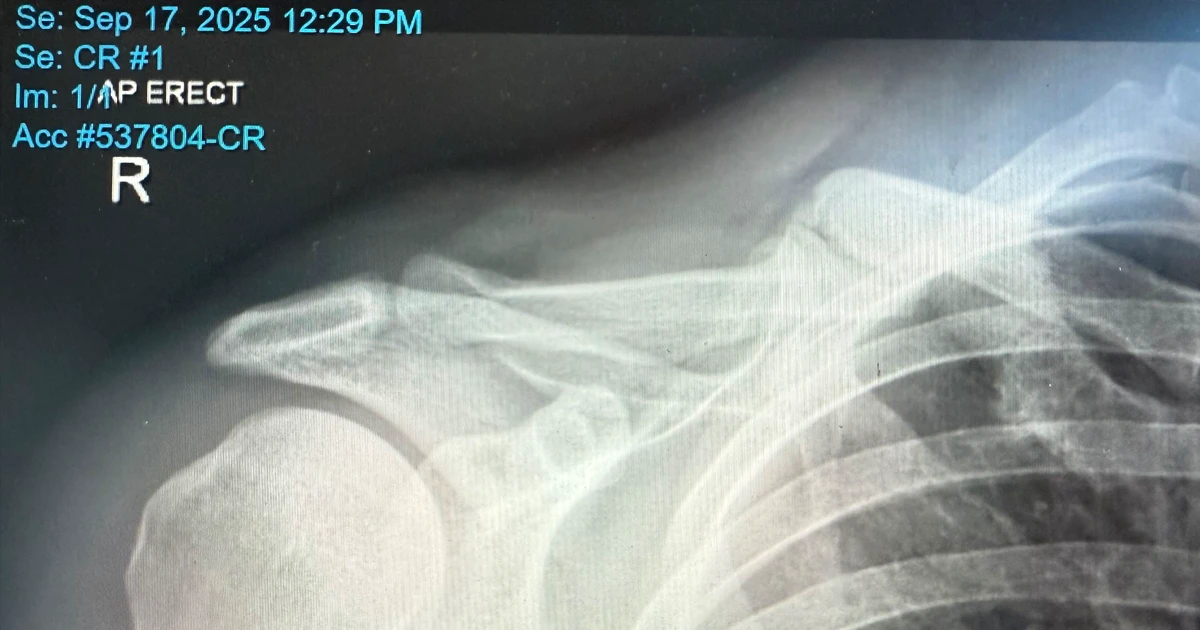
This patient is 49 years of age and suffered a fractured right clavicle 10 years ago after a fall from a motorbike. He was recommended non operative management and his clavicle went onto a painful non union. He presented to my rooms 10 years after the injury with longstanding pain and dysfunction related to his right clavicle non-union that had remained symptomatic over this period of time. While he had managed the condition for many years, his symptoms had progressively worsened, significantly affecting his comfort and shoulder function. He had seen numerous other surgeons who did not feel they could help him surgically.
CT imaging demonstrated a hypertrophic non-union with overlapping bony fragments involving the junction of the middle and medial thirds of the clavicle. After careful assessment and discussion of treatment options, surgical reconstruction was recommended due to the ongoing pain, deformity, and functional limitations. The proposed procedure involved a clavicle osteotomy and open reduction internal fixation, with the possibility of iliac crest bone grafting if required. The risks, benefits, and expected outcomes of surgery were discussed in detail, including the potential for infection, non-union, malunion, fixation failure, and the possibility of revision surgery.
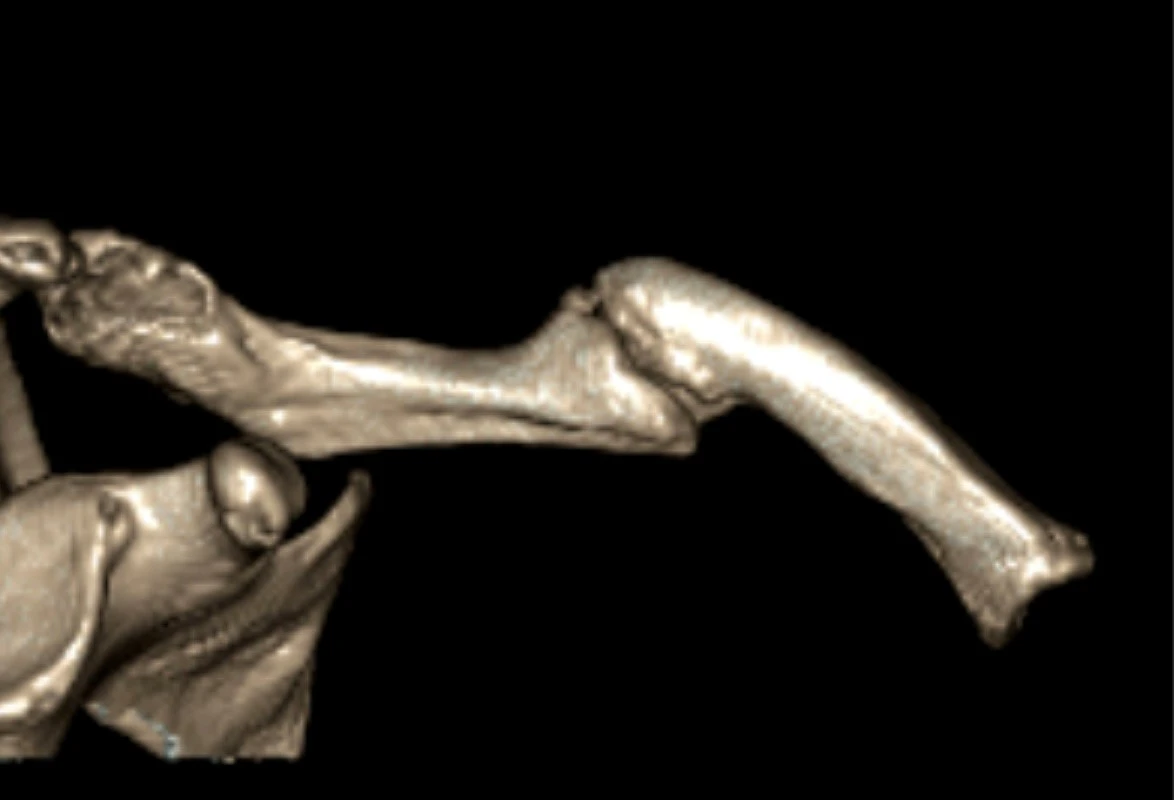
Pre op 3D model 1
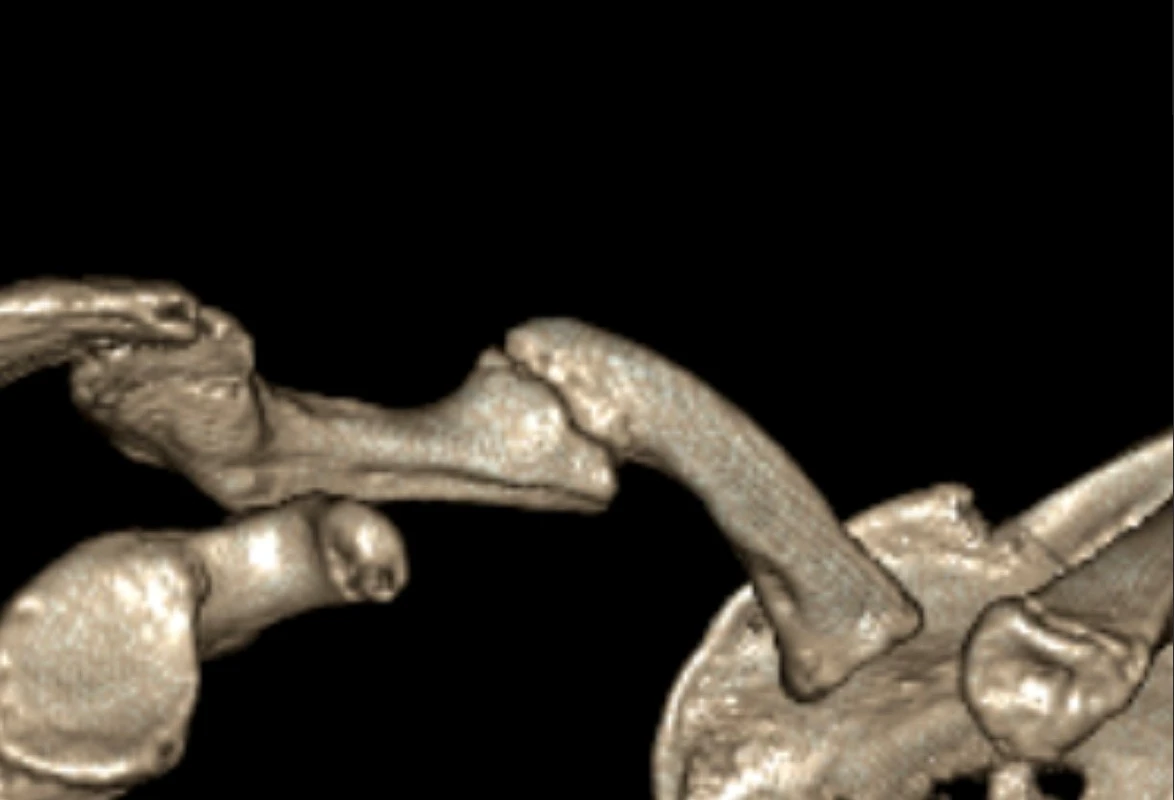
Pre op 3D model 2
The patient underwent a right clavicle osteotomy and open reduction internal fixation using a locking compression plate and local bone graft. Surgery was performed with the patient positioned in the beach chair position. Through a small incision beneath the clavicle, the hypertrophic non-union site was exposed and carefully taken down. The bone ends were prepared, and the clavicle was restored to its anatomical length and alignment without the need for iliac crest bone grafting. Oblique cuts allowed the fragments to sit securely in an anatomical position before stabilisation with a 10-hole locking compression plate. Local bone graft harvested during the procedure was applied around the repair site. Intraoperative imaging confirmed excellent alignment and fixation.
At six weeks following surgery, the patient’s recovery was progressing exceptionally well. He had regained full range of motion and demonstrated good shoulder strength without tenderness over the clavicle. Radiographs showed the fracture was nearing complete union. Importantly, he reported a significant improvement compared with his pre-operative state and described, for the first time since his original injury, a feeling that the clavicle was properly aligned. A graduated strengthening and conditioning program was commenced, including swimming, cycling, running, and light resistance training.
By three and a half months post-operatively, radiographs confirmed excellent healing and maintained alignment. Clinically, the patient had full, pain-free shoulder motion and substantial improvement in overall balance and function. The longstanding deformity that had been present for almost a decade had been successfully corrected. He was able to gradually return to gym activities while continuing to avoid contact sports during the final stages of healing.
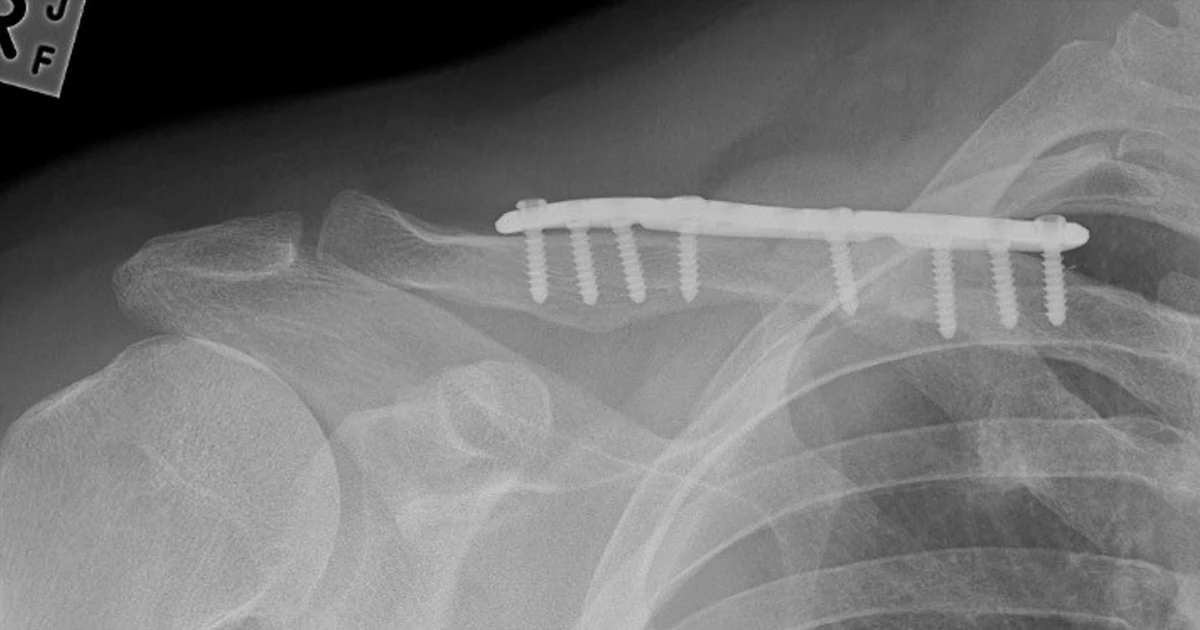
Post op xray 14 weeks
This case highlights the excellent outcomes that can be achieved in the management of chronic clavicle non-union using modern osteotomy and fixation techniques. Even in longstanding cases, restoration of anatomy and stability can provide significant pain relief, improved shoulder function, and a return to an active lifestyle.
For specific advice regarding clavicle non-union surgery, please book an appointment with Dr David Duckworth on (02) 9806 3333
