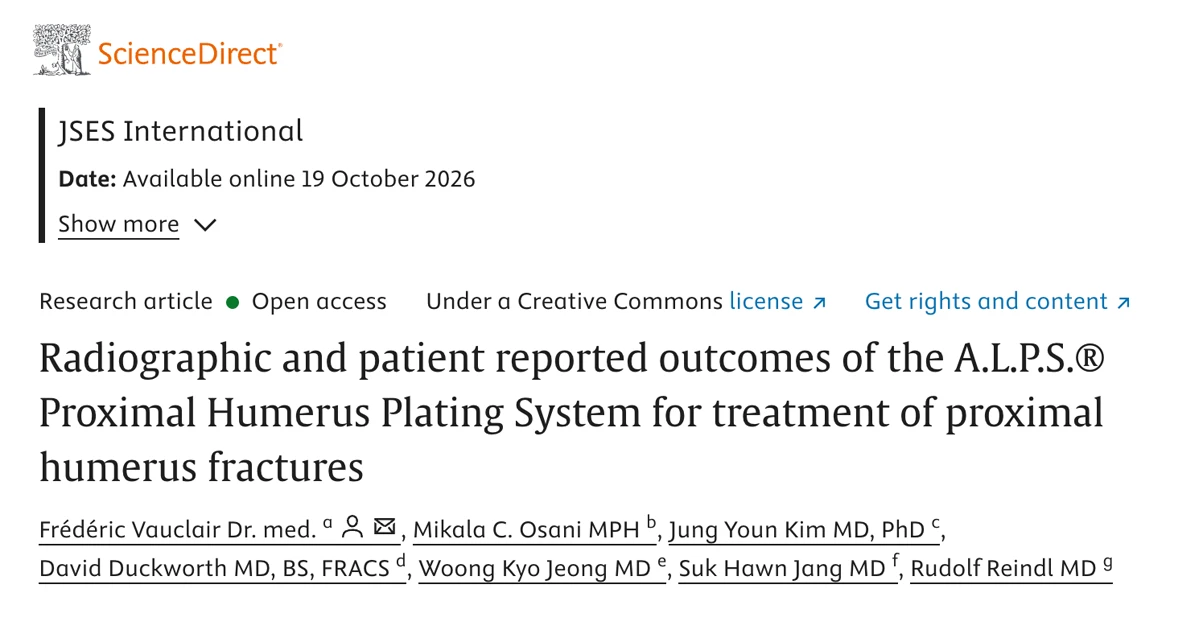
A.L.P.S.® Proximal Humerus Plating System for treatment of proximal humerus fractures
Dr David Duckworth was part of a multicentre clinical study that examined the outcomes of surgical treatment for proximal humerus (shoulder) fractures using a modern anatomically contoured locking plate system.
About the Study
The study was a multicentre prospective observational cohort conducted across seven sites in five countries. Patients aged 18 years or older with proximal humerus fractures who underwent ORIF using the A.L.P.S.® Proximal Humerus Plating System were enrolled, with a minimum one-year follow-up required for inclusion in this analysis.
Of 134 patients consented, 93 were ultimately evaluated, the majority of whom were female (63%). Researchers assessed fracture healing, shoulder-related adverse events and patient-reported outcome measures (EQ-5D-5L and ASES scores), along with range of motion at six weeks, three months, six months and one year after surgery.
Key Findings
The study reported encouraging outcomes following surgical fixation:
- Fracture healing: At one-year follow-up, 97.6% of patients with adequate radiographs achieved evidence of fracture healing.
- Screw perforation: Primary screw perforations occurred in just 2.2% of cases, with secondary perforation or screw loosening also occurring in 2.2% — notably lower than rates reported in much of the existing literature.
- Reoperation: Device removal was uncommon, with a total frequency of 4.5% across the full study population.
- Functional outcomes: Mean ASES scores improved significantly from 43.1 at six weeks to 86.0 at one year (p<0.001). Active forward elevation improved from approximately 70° at six weeks to approximately 144° at one year.
- Quality of life: Mean EQ-5D-5L scores reached 0.879 at one year, with a mean Health State score of 86.6% — both significantly improved compared to six-week follow-up (p<0.001).
What Do These Findings Mean?
The findings suggest that this anatomically contoured locking plate system provides favourable clinical performance for ORIF of proximal humerus fractures, with fracture healing and patient-reported outcomes comparable to prior studies, alongside a lower incidence of screw perforations than has been reported previously.
The research also provides valuable information for orthopaedic surgeons managing patients with these injuries, particularly where restoring shoulder function and quality of life are important considerations. As secondary screw perforation is a time-dependent complication, the authors note that future research should examine outcomes beyond one-year follow-up to better understand the timing of perforations and identify risk factors for late screw complications.
These findings may help guide treatment discussions and post-operative expectations for patients recovering from proximal humerus fractures.
For specific advice regarding surgery for shoulder fractures, please book an appointment with Dr David Duckworth on (02) 9806 3333
